Hi all,
Here is something I created recently, as a drop-in replacement module for agenix (uses the same options).
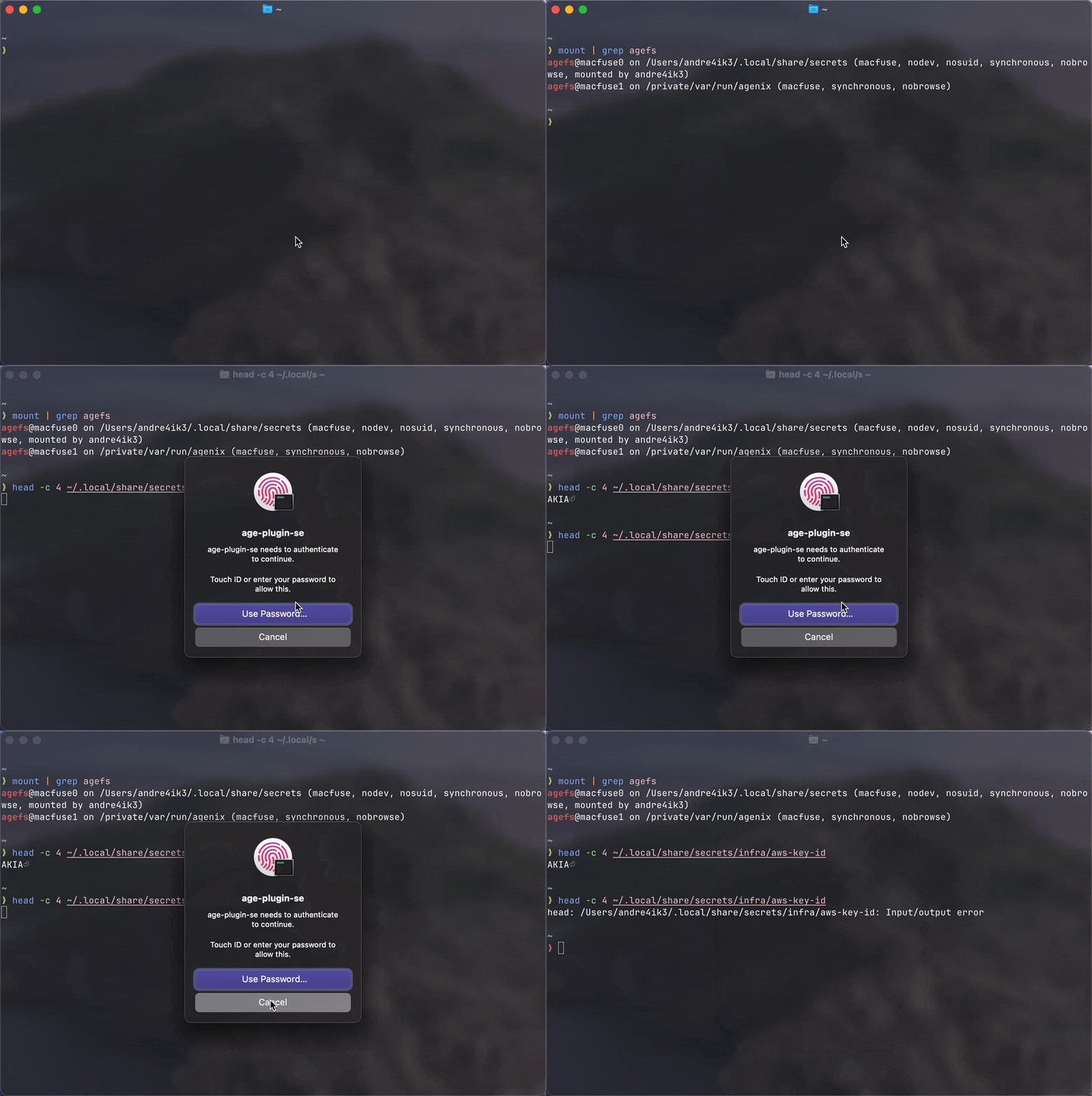
Instead of a shell script that decrypts all secrets during system activation, agefs is a small FUSE filesystem written in Golang that decrypts secrets on the fly as they are accessed. It creates filesystem entries for the secrets when mounted, but defers the actual decryption of the secrets until they’re opened. This solves many issues with agenix such as slow activation time, errors when an identity doesn’t exist/can’t decrypt a file, being swarmed by many decryption prompts on login (e.g. Touch ID prompt spam with age-plugin-se, this is why I created it initially), and when used with an interactive plugin can also serve as a method to authorize each secret use individually.
If there’s no identity to decrypt a secret, or decryption otherwise fails, the application will get back EIO when trying to access the file. The decryption will be tried again on next file access.
It works on macOS and NixOS, both for system and user secrets (using Home-Manager). On macOS, installing macFUSE is required.

By default it will decrypt secrets every time they are opened. But this can get annoying with interactive plugins (such as Touch ID with age-plugin-se), so an option age.keepCached = true allows to keep the decrypted contents in memory after it’s been opened once.
On macOS it will by default wait for agefs to be mounted before proceeding with the activation. This ensures that by the time activation is finished, the secrets are available. It’s much quicker than agenix activation but if it’s not needed it can be disabled with age.wait = false. On NixOS this doesn’t happen.
On NixOS it uses an automount unit for system-wide secrets, so they are not even mounted until they’re needed. This requires root privileges so it’s not available for user secrets.
I thought others might find it useful, so that’s why I’m posting it here on the discourse. I would put it in the announcements category since it seems more appropriate but it seems I’m not allowed to post there… 
Here is the project link, if you also face issues with agenix then try it out and let me know how it goes!: