As a developer, I recently found myself tasked with debugging a Kubernetes deployment, a challenge that would have been daunting without the help of Large Language Models (LLMs) and the Nix package manager. In this article, I will share my experience of how I utilized these tools to identify and resolve issues with my Kubernetes deployment, and how I created a modular system to manage the configuration, testing, and documentation of my setup.
Background
Kubernetes is a complex system, and debugging issues can be time-consuming and frustrating, especially for those without prior experience. The Kubernetes ecosystem is vast, with numerous components and configurations that can interact with each other in complex ways. To make matters worse, the official documentation, while comprehensive, can be overwhelming for beginners.
Enter LLMs and Nix
Large Language Models (LLMs) have revolutionized the way we approach problem-solving in software development. By providing context-specific suggestions and explanations, LLMs can help developers navigate unfamiliar territories, such as Kubernetes. Nix, on the other hand, is a package manager that allows developers to manage dependencies and configurations in a reproducible and declarative way.
Creating a Kubernetes Module
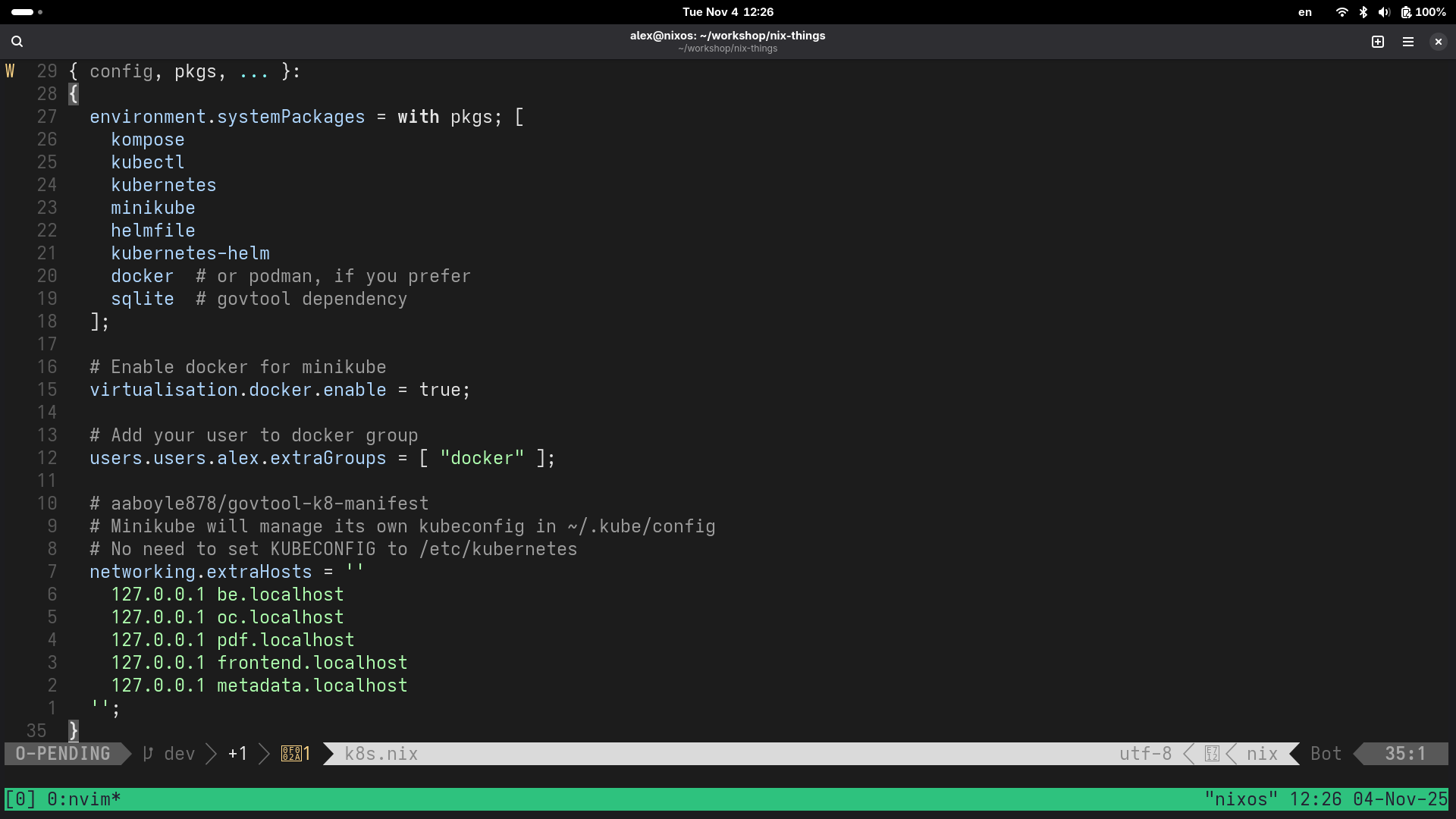
My first step was to create a Nix module for Kubernetes. This involved defining a set of configurations and dependencies that would be used to set up my Kubernetes cluster. I used the kubernetes package from the Nix package repository to install the necessary components. The module, which I named k8s.nix, contained the following configuration:
Bootstrapping the Cluster
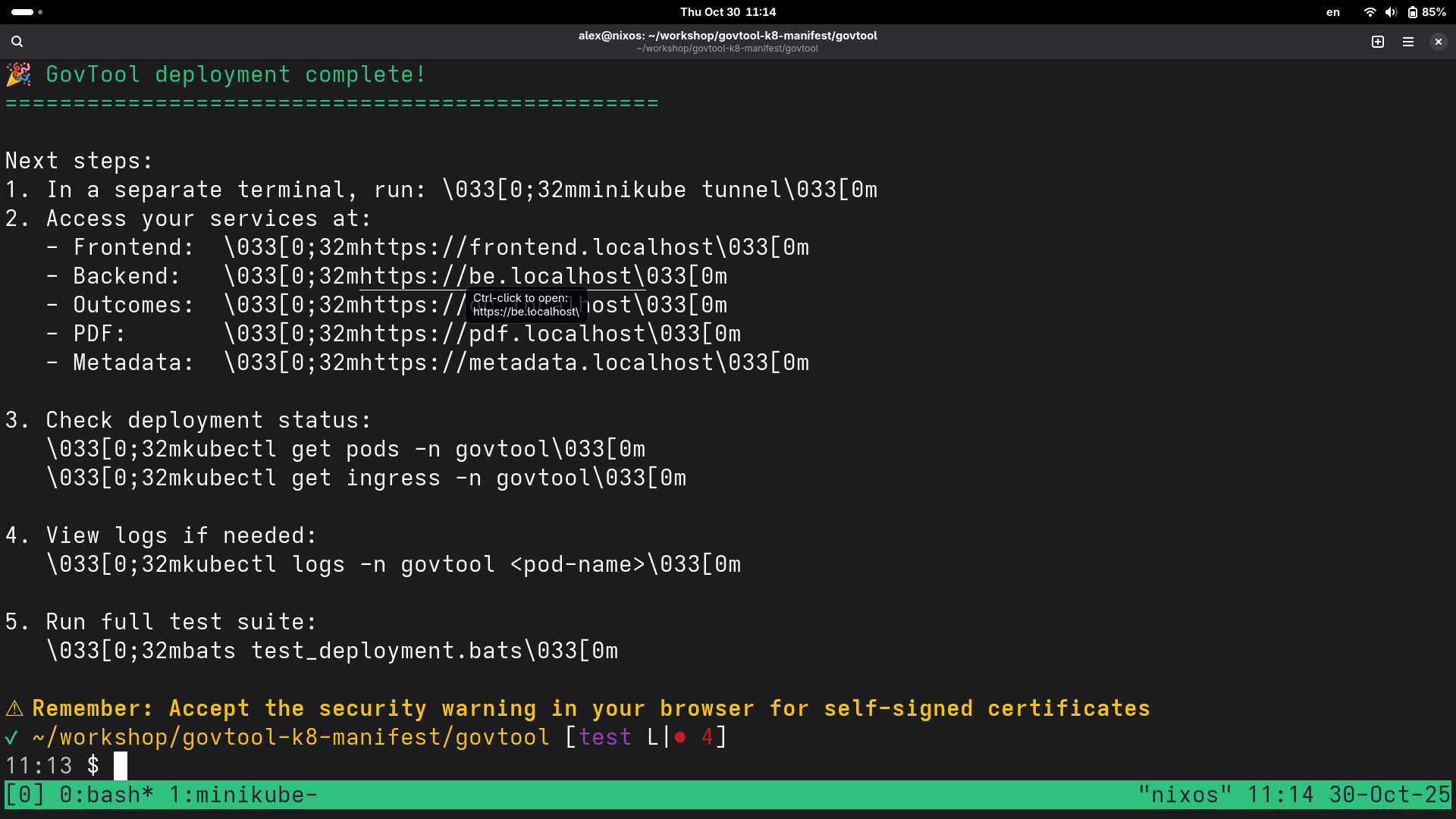
With my Kubernetes module in place, I created a bootstrap script, bootstrap.sh, that would set up my Kubernetes cluster:
Testing and Debugging
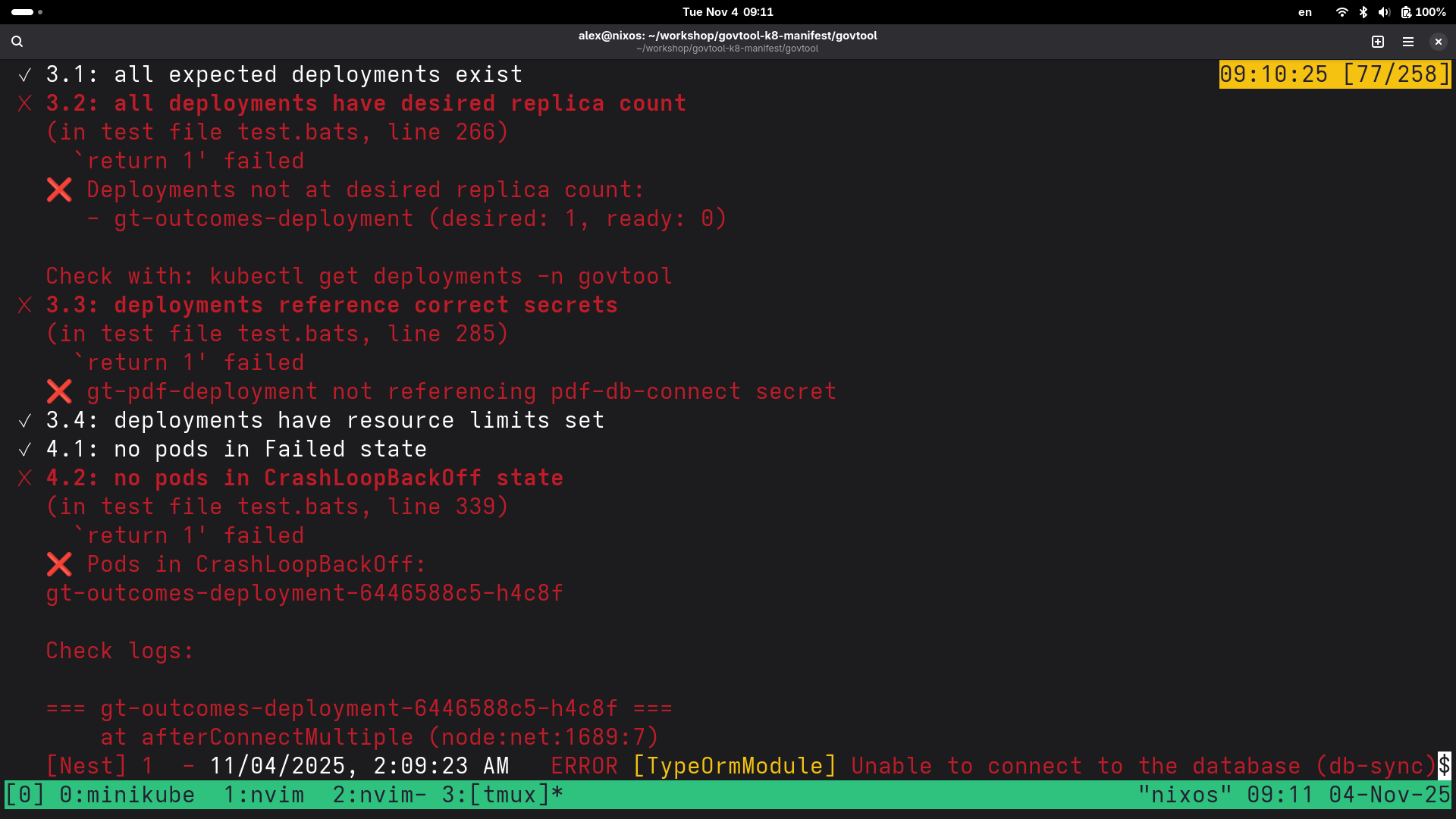
Once my cluster was set up, I used the Kubernetes configuration files and log outputs to create tests that would capture points of failure. I wrote these tests in a separate file, tests.bats, using the bats cli tool:
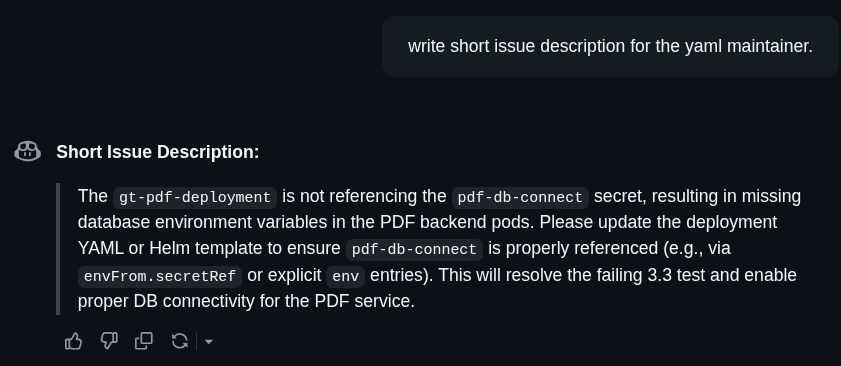
At each step, as new errors appeared, I kept feeding the outputs to different models and once the error would change I would feed the model the test file, or the bootstrap script and ask to improve it to account for the fix:
Conclusion
In this article, I have demonstrated how I leveraged LLMs and Nix to debug a Kubernetes deployment. By creating a modular system, I was able to manage the complexity of my configuration and iterate towards a working solution. The LLM provided context-specific suggestions and explanations, helping me navigate the unfamiliar territory of Kubernetes.
My experience highlights the power of combining LLMs with Nix to tackle complex software development challenges. By using these tools, developers can create reproducible, declarative configurations that are easy to manage and debug, even in the face of complexity and uncertainty.
I hope that my story will inspire others to explore the possibilities of LLMs and Nix in their own software development projects. Whether you are a seasoned developer or just starting out, these tools can help you overcome even the most daunting challenges and achieve success in your endeavors.